How to Eat More Protein: Whole Foods Versus Supplements for Results
By:Author:Walking Yoga Editorial
Updated on:September 30, 2026

- Does Eating More Protein Actually Work?
- Why This Beats the Harder Alternative
- The Quantity Question: How Much Protein Do You Need
- The Practical Question: How Do You Actually Eat More Protein
- Comparison: Whole Foods Versus Protein Powder
- The Forbidden Promise, Answered Honestly
- Levers That Change the Result
- How Long Until You See Results?
- Your First Four Weeks
- What Stalls Progress
- Why Walking Yoga Works for This
- Final Thoughts
- Frequently Asked Questions
Most people can add 20 to 30 grams of protein a day just by swapping what's already on the plate, no extra cooking required.
Protein takes longer to digest than carbs or fat, so meals built around it tend to keep you fuller for longer and steadier through the afternoon.
This guide covers whether the swap actually works, how much protein you need, simple ways to hit that number, and what tends to derail people in the first month.
Does Eating More Protein Actually Work?
The mechanism is simple. Protein is more filling gram for gram than carbohydrate or fat, so a higher-protein meal often means less reaching for snacks an hour later.
The arithmetic backs it up without needing a study. Swap a 30 gram bowl of cereal for 2 eggs and a slice of wholemeal toast with beans, and the meal moves from roughly 8 grams of protein to over 20 grams, same rough calories, more staying power.
It's not a shortcut on its own. Protein helps with appetite and with keeping muscle while you're active, but it works alongside movement, not instead of it.
Why This Beats the Harder Alternative
The harder alternative is counting every calorie or cutting whole food groups out. Most people can't sustain that past a few weeks, which is exactly why so many diets stall.
Swapping in more protein at meals you're already eating asks for less willpower than restriction does. You're not adding a new habit from scratch, you're upgrading the one you've already got.
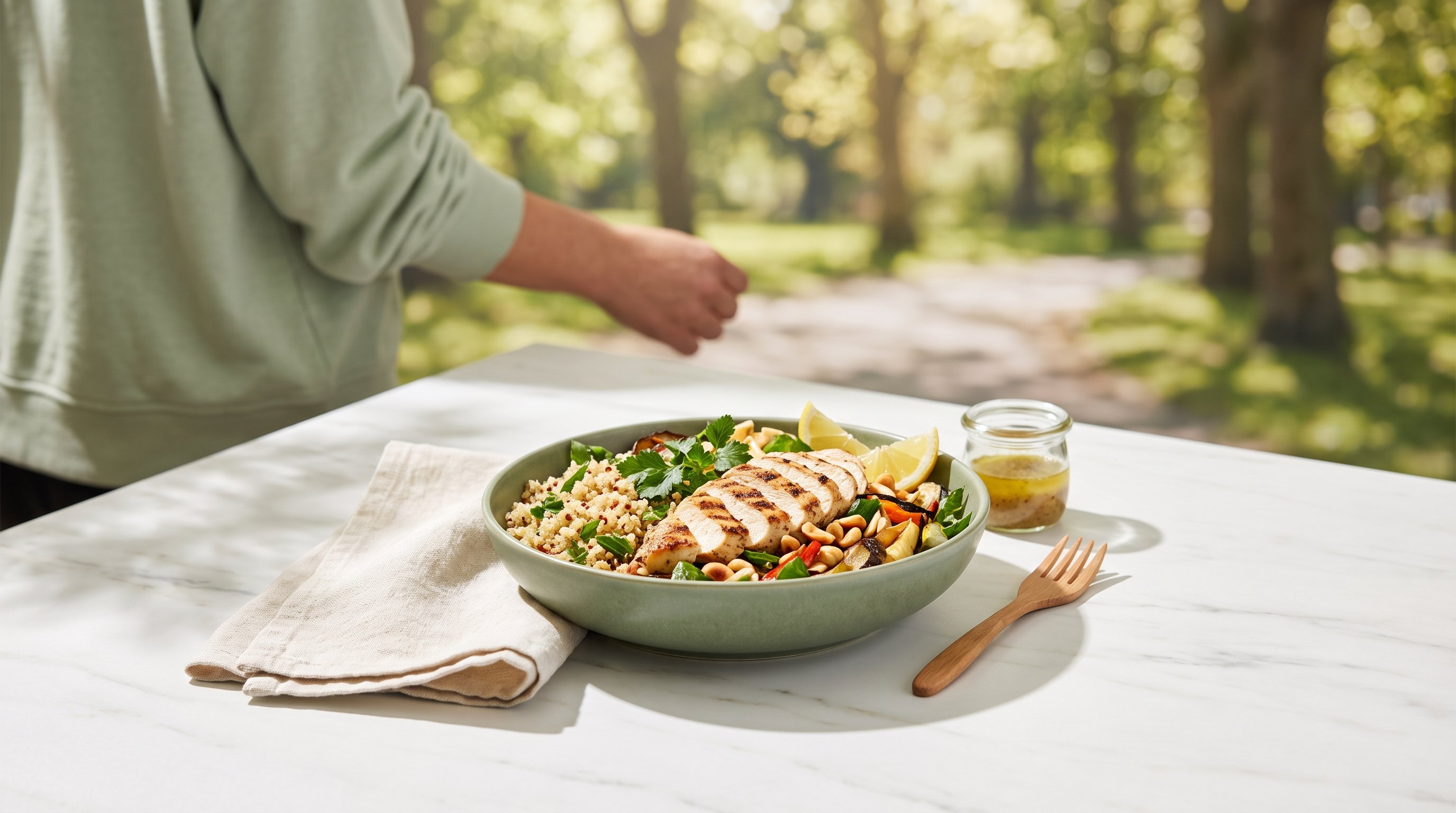
Consistency is unglamorous and it wins anyway. A protein swap you actually keep doing for months beats a strict plan you abandon in week three.
The Quantity Question: How Much Protein Do You Need
There's no single number that fits everyone, but a common starting point people use is roughly 1.2 to 1.6 grams of protein per kilogram of bodyweight per day when they're active.
For someone at 70 kg, that works out to somewhere between 84 and 112 grams a day, spread across meals rather than crammed into one sitting.
Find Your Own Number
Take your weight in kilograms and multiply by 1.2 for a low-end target, or by 1.6 for a higher-end one, then split that total across 3 to 4 meals so no single meal has to carry the whole day.
| Bodyweight | Low-End Target | High-End Target |
|---|---|---|
60 kg | 72 g | 96 g |
70 kg | 84 g | 112 g |
80 kg | 96 g | 128 g |
90 kg | 108 g | 144 g |
The Practical Question: How Do You Actually Eat More Protein
The easiest wins come from small swaps, not new recipes. Adding a second egg, choosing Greek yoghurt over regular, or tossing beans into a soup all move the number without changing your routine.
Batching helps too. Cooking a tray of chicken thighs or a pot of lentils once and portioning it across a few days removes the daily decision entirely.
This is where a meal plan built around food you already like earns its keep, and it's exactly what the Walking Yoga app offers alongside its walking and stretching sessions - a way to see protein, water and steps in one place instead of guessing.
Comparison: Whole Foods Versus Protein Powder
Both routes get you to the same number. The decision usually comes down to time, cost and whether you actually enjoy chewing your protein.
| Factor | Whole Foods | Protein Powder |
|---|---|---|
Prep time | Needs cooking or planning | Mixes in under a minute |
Cost per serving | Varies by food choice | Often fixed per scoop |
Fullness | Higher, more chewing | Lower, liquid form |
Other nutrients | Fibre, vitamins included | Protein only, mostly |
Convenience on busy days | Lower unless prepped | Higher, grab and go |
The Forbidden Promise, Answered Honestly
Eating more protein will not target fat in one specific area of the body. That's not how digestion or fat storage works, no matter which food or app promises it.
It also won't produce overnight change. What it can do is support fuller meals, steadier energy and, alongside regular movement, a body composition that shifts gradually over time.
The honest answer is that protein is one useful lever among several, not a cure for anything and not a guarantee of a particular outcome.
Levers That Change the Result
Some changes move the needle more than others. Here's the order that tends to matter most.
What Actually Moves the Needle
- Protein at every meal, not just dinner - spreading it out keeps you fuller across the whole day instead of one heavy evening plate.
- Pairing it with regular movement - walking or gentle activity gives the extra protein somewhere useful to go.
- Batch prepping once or twice a week - removes the daily decision that causes most people to slip back to low-protein defaults.
How Long Until You See Results?
Appetite changes tend to show up first, often within the first couple of weeks of consistently eating more protein at breakfast and lunch.
Anything beyond that - energy, body composition, how clothes fit - takes longer and varies a lot from person to person, so it's worth judging progress by consistency, not the calendar.
The point where most people quit is week two or three, right when the habit hasn't fully clicked yet but the novelty has worn off.
Your First Four Weeks
The order of these steps matters more than hitting a perfect gram count on day one.

| Week | Main Focus |
|---|---|
Week 1 | Add protein to breakfast only |
Week 2 | Add protein to lunch too |
Week 3 | Batch prep one protein source |
Week 4 | Spread protein across all meals |
What Stalls Progress
Only Adding Protein at One Meal
If dinner is the only high-protein meal, the rest of the day still runs on quick energy dips. Spread the target across breakfast and lunch too.
No Plan for Busy Days
Without something prepped, the default is whatever's fastest, which is rarely protein-rich. Batch cook once so a fallback option always exists.
Chasing a Perfect Number
Hitting an exact gram count every single day is a fast route to giving up. A rough target hit most days beats a precise one hit rarely.
Ignoring Movement Entirely
Protein without any regular activity does less work on its own. Even a short daily walk gives the extra intake somewhere to go.
Losing Track of What's Actually Eaten
It's easy to overestimate protein intake without writing anything down. A simple daily log, even a rough one, closes that gap fast.
Why Walking Yoga Works for This
Walking Yoga pairs a meal plan built around food you already like with trackers for water, steps and weight, so protein swaps don't have to be guesswork.
The guided walking and stretching sessions give that extra protein somewhere useful to go, and the habit-building challenges make the whole thing easier to stick with past week three.
Final Thoughts
Eating more protein doesn't need a strict plan or a cupboard full of powders. It needs a few repeated swaps at meals you're already having, kept up long enough to become automatic.
Start with one meal this week, add movement alongside it, and let Walking Yoga help keep the whole picture - food, water, steps - in one place.
Frequently Asked Questions
How Much Protein Do I Actually Need to Lose Weight?
There's no fixed weight-loss number, but many active adults aim for roughly 1.2 to 1.6 grams per kilogram of bodyweight daily. Pair that with regular movement rather than expecting the number alone to do the work.
Isn't a High-Protein Diet Hard to Maintain?
It doesn't have to mean a full diet overhaul. Small swaps at meals you already eat, like an extra egg or swapping in Greek yoghurt, add up without feeling restrictive.
What If I Don't Have Time to Cook Protein-Rich Meals?
Batch prepping once or twice a week removes the daily decision entirely. A tray of cooked chicken or a pot of lentils portioned into containers covers several days in one go.
Why Do People Usually Stop After a Couple of Weeks?
The habit often hasn't clicked yet by week two or three, right as the initial motivation fades. Walking Yoga's tracking and challenges are built to carry people through that exact stretch.
Share this post