Clean Eating Meal Plan: A Practical Guide That Sticks
By:Author:Walking Yoga Editorial
Updated on:September 30, 2026

- Does a Clean Eating Meal Plan Actually Work?
- Why This Beats the Harder Alternative
- The Quantity Question: How Much, How Often
- The Practical Question: Building One You'll Actually Use
- Comparison: Structured Plan Versus Winging It
- The Forbidden Promise, Answered Honestly
- Levers That Change the Result
- How Long Until You See Results?
- Your First Four Weeks
- What Stalls Progress
- Why Walking Yoga Works for This
- Final Thoughts
A clean eating meal plan works when it removes decisions, not when it removes entire food groups. The whole point is fewer choices at the moment you're hungry and tired, not a list of banned foods.
The mechanism is simple: when meals are decided in advance, you eat what you planned instead of what's closest. That single shift - less improvising, more repeating - is what makes a plan easier to follow than willpower alone.
This guide covers whether clean eating actually does anything, how much food and structure you need, the practical side of building one, and what tends to knock a plan off course in the first month.
Does a Clean Eating Meal Plan Actually Work?
The mechanism behind clean eating is straightforward. Meals built mostly from whole foods tend to be lower in added sugar and refined starch, which means fewer calories sneak in without you noticing.
Here's the honest arithmetic. If a typical processed snack runs 250 to 300 calories and a whole-food swap - fruit, nuts, yoghurt - runs 120 to 150, swapping one snack a day for a month adds up to a noticeable calorie difference, purely from that one change.
That's not magic, it's subtraction. The plan doesn't need to be perfect to work, it just needs to shift the average of what you eat across most days.
Where it falls short is speed. Nutrition changes what you take in, but movement changes how your body uses energy day to day, and pairing the two tends to feel more sustainable than either alone.
Why This Beats the Harder Alternative
The harder alternative is the strict diet: cutting out entire categories, weighing everything, counting every gram. It can work for a week or two, then it usually collapses because it demands too much attention every single day.
A clean eating meal plan asks less of you daily. Fewer rules, repeated often, beat strict rules followed rarely - the whole game is sessions completed, or in this case meals followed, per month, not how flawless any single meal is.
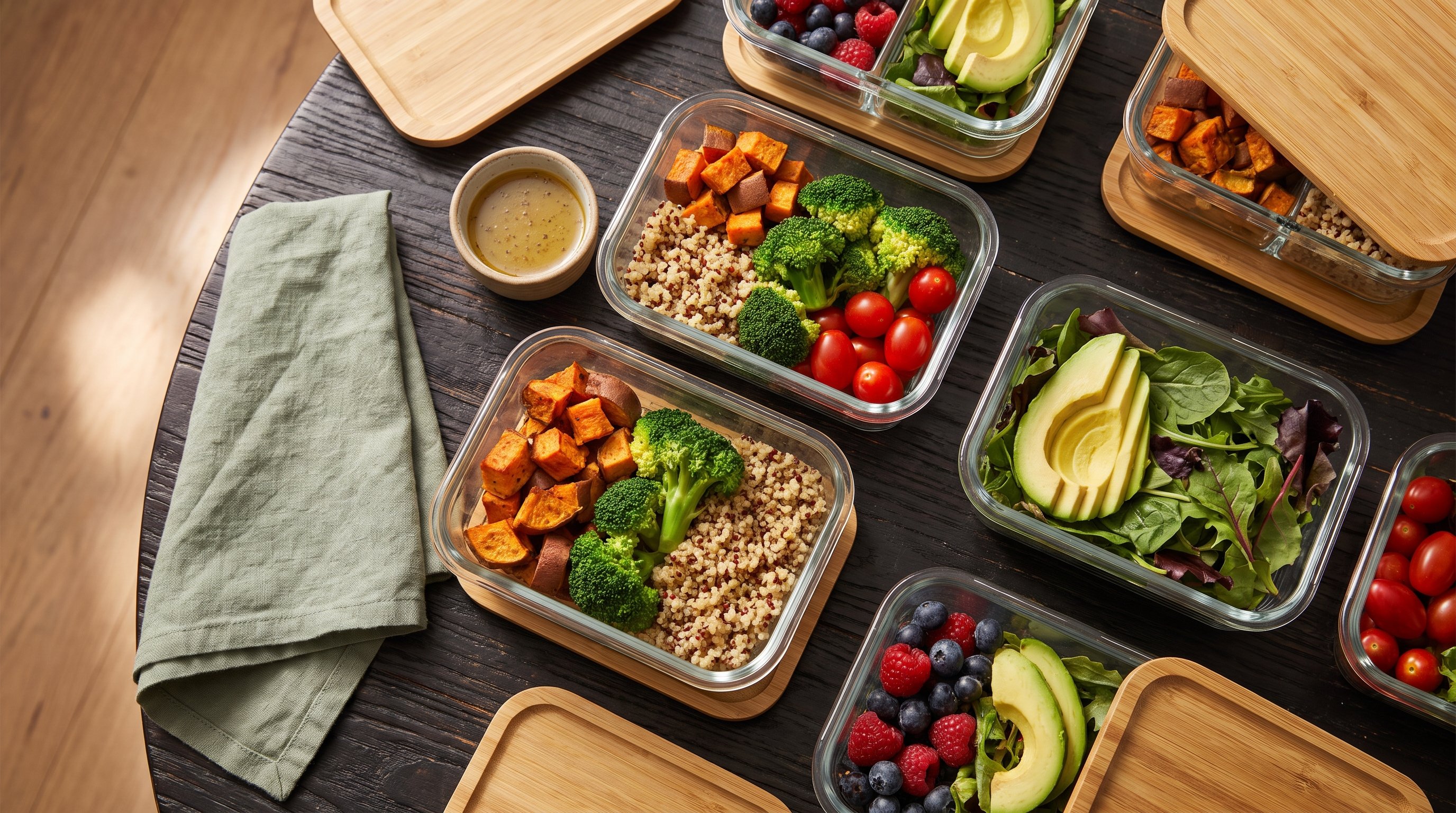
Think of it like exercise: a short daily walk done consistently outperforms an intense workout done once and abandoned. The same logic applies to food - the plan you'll actually repeat wins over the one that looks stricter on paper.
The Quantity Question: How Much, How Often
There's no single number that fits everyone, but there are starting points that work for most people building a first plan.
Three balanced meals a day, each built around a protein source, a vegetable or fruit, and a whole grain or starch, gives you a template without forcing you to think from scratch each time.
Find Your Own Number
Start by counting how many meals a week you currently cook versus buy or grab on the go, then aim to shift just two or three of those toward the whole-food template. Small, countable changes are easier to track than vague intentions.
| Meal | Structure | Example |
|---|---|---|
Breakfast | Protein plus fruit | Eggs and berries |
Lunch | Protein plus vegetables plus grain | Chicken, greens, rice |
Dinner | Protein plus vegetables plus starch | Fish, broccoli, potato |
Snack | Whole food, single ingredient | Yoghurt or nuts |
The Practical Question: Building One You'll Actually Use
The practical hurdle isn't knowing what clean eating means, it's deciding what to cook on a Tuesday when you're tired and the fridge is half empty.
A repeatable template solves this better than a rigid seven-day script, because you can rotate the same three or four meals without feeling stuck.
This is where a meal plan built around food you already like helps - Walking Yoga pairs an easy-to-follow personal meal plan with step, water, and weight trackers, so the eating side and the movement side sit in one place instead of two separate habits fighting for attention.
Comparison: Structured Plan Versus Winging It
Most people aren't choosing between clean eating and junk food, they're choosing between a written plan and figuring it out meal by meal.
| Factor | Structured Plan | Winging It |
|---|---|---|
Decisions per day | Low, decided ahead | High, every meal |
Grocery trips | Fewer, list-based | Frequent, reactive |
Time cost | Upfront, batch cooking | Spread thin daily |
Consistency | Easier to repeat | Depends on mood |
Cost over time | Often lower, less waste | Higher, impulse buys |
The Forbidden Promise, Answered Honestly
No meal plan targets one area of the body. Eating clean doesn't shrink a specific spot, the body draws energy from stores all over, not from wherever you'd prefer it to.
There's also no overnight version of this. Nothing here cures anything or reverses anything, and any plan promising a fast, guaranteed number on a specific day is asking you to trust something that arithmetic can't back up.
The real answer is slower and less exciting: consistent whole-food eating, paired with regular movement, shifts the average of your week, and that average is what actually moves things over time.
Levers That Change the Result
Not every change matters equally. These three carry the most weight, in order.
Biggest Levers
- Meal frequency you can repeat - a plan followed five days a week beats a stricter one followed two.
- Protein at each meal - it keeps meals satisfying, which makes the plan easier to stick to without extra snacking.
- Movement layered on top - even light daily activity changes how the day's food gets used, not just how much you ate.
How Long Until You See Results?
This is where most people quit - somewhere in the second or third week, when the novelty's gone and nothing dramatic has happened yet.
There's no fixed timeframe worth promising here, and any number would be a guess dressed up as fact. What's more reliable is watching for smaller signs first: steadier energy, fewer cravings, meals that feel less like a decision and more like a routine.

Your First Four Weeks
Order matters more here than exact numbers. Build the habit before you tighten anything.
| Week | Focus | Goal |
|---|---|---|
Week 1 | Swap one snack daily | Build the habit |
Week 2 | Plan three dinners ahead | Reduce decisions |
Week 3 | Add protein to breakfast | Improve satiety |
Week 4 | Batch cook two meals | Save time midweek |
What Stalls Progress
Planning Meals You Don't Actually Enjoy
A clean eating plan built on food you dread won't survive a busy week. Pick two or three meals you genuinely like and rotate them instead of forcing variety.
Skipping Meals to Compensate
Skipping breakfast because dinner was heavy usually backfires into overeating later. Keep meals regular even on days that felt imperfect.
No Grocery List
Shopping without a list leads straight back to convenience food. A short list built from your repeatable meals removes that decision at the store.
Treating One Off Day As Failure
One meal that didn't fit the plan doesn't undo the week. The fix is simply the next meal, not a restart on Monday.
No Movement Paired With the Food Changes
Diet alone tends to feel slower and less motivating without any activity alongside it. Even light daily movement gives the eating changes something to work with.
Why Walking Yoga Works for This
Walking Yoga pairs its meal plan feature with trackers for steps, water, and weight, so you're not juggling a food app and a fitness app separately.
The challenges feature is built around habit-building rather than intensity, which matches how a clean eating meal plan actually sticks - small, repeated actions logged in one place, with the stress-relief techniques and guided meditations there for the days motivation runs low.
Final Thoughts
A clean eating meal plan doesn't need to be complicated to work. It needs a repeatable structure, a little protein at each meal, and enough flexibility that one off day doesn't derail the week.
Start small: pick one meal to rebuild this week using the template above, and if you want the eating and movement side tracked together, Walking Yoga keeps both in one place.
FAQ
Whole foods can cost more per item, but fewer impulse buys and less food waste often balance that out over a month. Batch cooking from a list tends to lower the overall bill compared with frequent convenience purchases.
Not necessarily, since whole foods can be just as filling calorie for calorie, sometimes more so because of fibre and protein content. The difference is usually in what's added - sugar, refined starch - not in portion size alone.
Batch cooking two or three meals once a week covers most of the week without daily effort. The template in this guide is built to repeat, which cuts down on how often you need to plan from scratch.
This is the point most plans get abandoned, usually because the routine hasn't been paired with anything that tracks progress. Walking Yoga's trackers and challenges are built for this exact stretch, giving you a visible record to look back on when motivation alone isn't enough.
Share this post