Breakfast Ideas for Busy People: What to Actually Eat on Fast Mornings
By:Author:Walking Yoga Editorial
Updated on:September 30, 2026

- Does a Fast Breakfast Actually Work?
- Why This Beats the Harder Alternative
- The Quantity Question: How Much Breakfast Do You Need?
- The Practical Question: What Do You Actually Eat?
- Comparison: Prepped vs Grab-And-Go vs Skipping
- The Forbidden Promise, Answered Honestly
- Levers That Change the Result
- How Long Until You See Results?
- Your First Four Weeks
- What Stalls Progress
- Why Walking Yoga Works for This
- Final Thoughts
Breakfast doesn't need a recipe or a spare 20 minutes. Most busy mornings only need 3 to 5 minutes of prep and something that travels well.
The mechanism is simple: a meal with protein and slow-release carbs holds hunger off longer than sugar-heavy options, which means fewer mid-morning snack decisions.
This guide covers what actually works on a rushed schedule, how much you really need, a four-week starting plan, and where breakfast habits tend to fall apart.
Does a Fast Breakfast Actually Work?
A fast breakfast works the same way a slow one does - it's about what's on the plate, not how long it took to make.
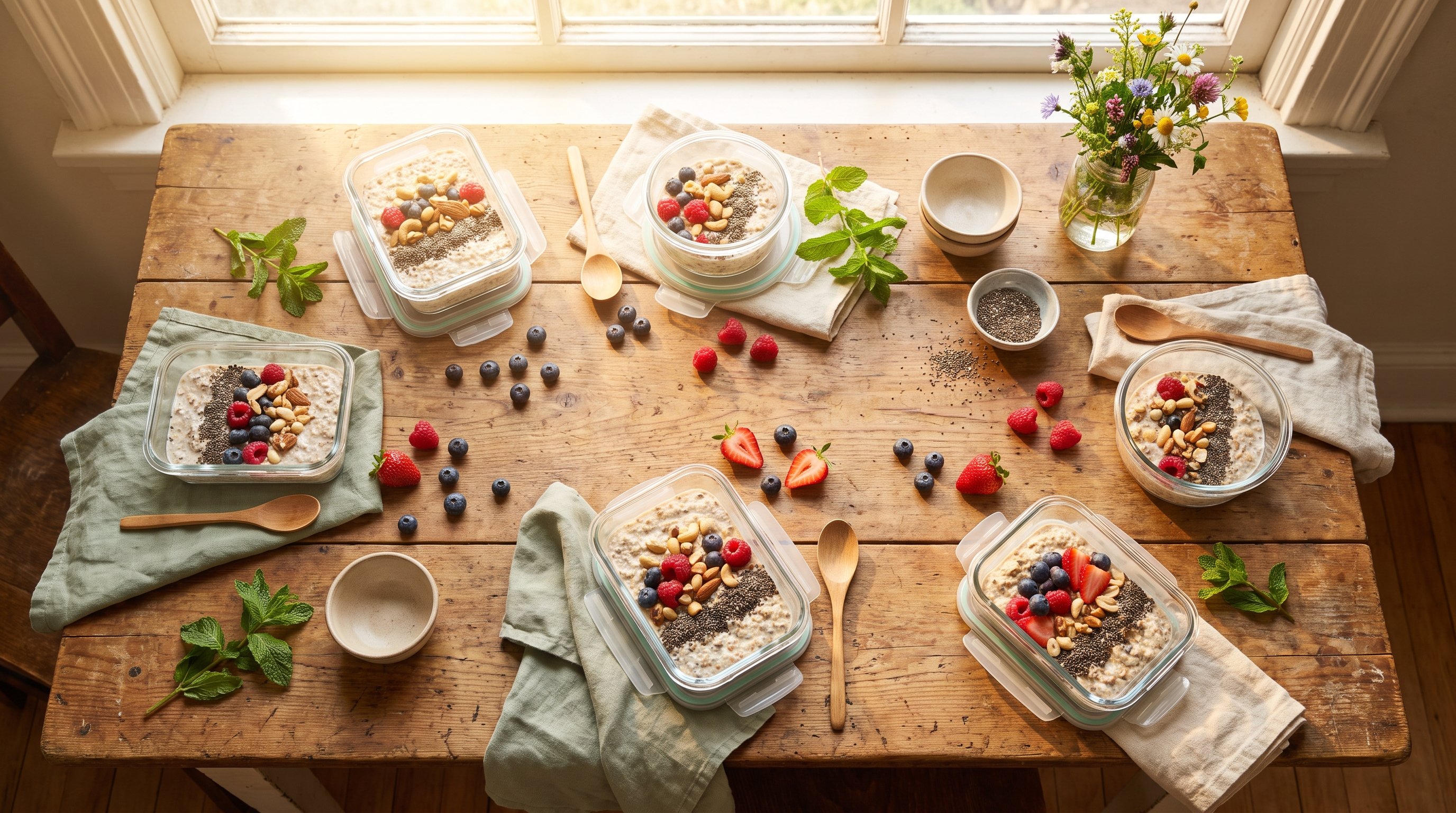
Overnight oats made the night before take about 5 minutes of hands-on time and still deliver the same oats, milk and toppings as a stovetop version made at 7am.
Do the arithmetic: skip breakfast and you might save 5 minutes, but an energy dip by 10am can cost far more focus than that 5 minutes bought you.
The honest answer is that a rushed breakfast beats no breakfast, and a prepped one beats both, because the work happens the night before instead of the morning of.
Why This Beats the Harder Alternative
The harder alternative is a fresh, cooked breakfast every single day - eggs, a pan, washing up, all before a commute.
That's fine on a slow Sunday but it rarely survives a Tuesday, and a plan that only survives Sundays isn't a habit.
A simpler, repeatable breakfast gets eaten more days per month, and days eaten is what actually matters, not how impressive any single plate looks.
This is the same logic behind short daily movement over occasional long workouts: consistency beats intensity almost every time.
The Quantity Question: How Much Breakfast Do You Need?
There's no single correct portion - it depends on how long it needs to hold you and what you're doing before lunch.
A short commute and a desk morning need less than a morning that includes a walk, a workout or a busy school run.
Find Your Own Number
Start with one protein source, one slow carb and one fruit or vegetable, then adjust the portions over a week or two based on when hunger returns.
If hunger hits before 10am, the portion was too small or too light on protein; if you're still full at lunch, it was more than you needed.
The Practical Question: What Do You Actually Eat?
Practical breakfasts share a few traits: they need no cooking, or one pan at most, and they travel in one container.
Overnight oats, yoghurt with fruit and nuts, a wrap made the night before, or a smoothie blended in under 2 minutes all fit that brief.
Pairing breakfast with a short walk or a few minutes of stretching in the same window can make the whole morning routine feel like one block instead of separate chores.
Walking Yoga's session tracker and its meal plan feature both sit in the same app, so the morning walk and the breakfast choice can be logged in the same place instead of juggled across different habits.
Comparison: Prepped vs Grab-And-Go vs Skipping
Most busy people are choosing between three routes: prep the night before, grab something ready-made, or skip breakfast and eat earlier at lunch.
| Option | Prep Time | Holds Hunger |
|---|---|---|
Overnight Oats | 5 min night before | Yes, slow release |
Yoghurt And Fruit | 2 min same morning | Moderate |
Grab-And-Go Bar | 0 min | Short, sugar dependent |
Smoothie | 3 min blend | Moderate to good |
Skipping Breakfast | 0 min | Poor, early hunger |
None of these is wrong for every day - the point is knowing which one you're choosing and why.
The Forbidden Promise, Answered Honestly
No breakfast, however well planned, targets fat in one area of the body - the body doesn't work that way and no food choice changes that.
There's also no overnight fix here: swapping a pastry for oats once won't change much on its own.
What breakfast actually does is steady, unglamorous - it removes one decision point in the day and can reduce the chance of an energy crash that leads to a bigger, less planned meal later.
That's the honest scope of it, and it's still worth doing.
Levers That Change the Result
Three things shift how well a breakfast habit actually sticks and pays off over weeks, not just one morning.
What Actually Moves the Needle
- Prep the night before - the single biggest reason a breakfast plan survives a rushed week instead of collapsing by Wednesday.
- Protein at breakfast, not just carbs - it's what actually holds hunger off, more than the size of the portion.
- Pairing it with a routine - eating breakfast right before or after a short walk anchors both habits to the same moment in the day.
How Long Until You See Results?
Nobody notices a single breakfast - what people notice is a few weeks of steadier energy and fewer 11am snack runs.
It's fair to expect that to take a stretch of consistent weeks rather than days, and it's worth staying vague about exactly when, because it's genuinely different for everyone.
The early wins are usually about ease - less decision fatigue, fewer mornings scrambling - before anything else shows up.
Your First Four Weeks
A simple month of small shifts, in order of what matters most first.

| Week | Focus | Action |
|---|---|---|
Week 1 | Pick two go-to breakfasts | Prep one the night before |
Week 2 | Add a protein source | Yoghurt, eggs or nut butter |
Week 3 | Pair breakfast with a short walk | Same time each day |
Week 4 | Review what actually got eaten | Drop what didn't work |
What Stalls Progress
No Prep the Night Before
A rushed morning with zero prep almost always ends in skipping breakfast - set out the container or the oats jar before bed instead.
All Carbs, No Protein
Toast alone or a sugary bar burns off fast and leaves you hungry by mid-morning - add yoghurt, eggs or nut butter to slow that down.
Too Many New Recipes at Once
Trying five new breakfasts in one week is exhausting to plan - pick two reliable options and rotate them instead.
Skipping on the Hardest Days
The busiest mornings are exactly when breakfast gets dropped, which defeats the point - keep one zero-effort backup, like a pre-made smoothie pack, for those days.
Treating It As All or Nothing
Missing one morning doesn't undo the habit - the next breakfast is the one that counts, not a perfect streak.
Why Walking Yoga Works for This
Breakfast habits and movement habits tend to succeed or fail together, since both depend on the same rushed morning window.
Walking Yoga brings a meal plan built around food you already like and a step counter into one place, so the morning walk and the breakfast choice aren't two separate things to remember.
Its trackers keep water, weight and steps visible in one spot, which makes it easier to notice what's actually working across a week instead of guessing.
Final Thoughts
A good breakfast for a busy person isn't the most impressive one - it's the one that gets eaten on the days that matter most.
Pick one simple option, prep it the night before, and let Walking Yoga help keep the walk and the meal plan sitting side by side instead of competing for the same rushed minutes.
FAQ
It can support the bigger picture by reducing energy crashes and impulsive snacking later in the day. It's not a fix on its own - it works alongside movement and an overall eating pattern.
It's simpler in the moment but often costs more later, through an energy dip or a bigger lunch. A 5-minute prep the night before removes that trade-off entirely.
That's exactly what night-before prep solves - oats in a jar or a wrap made the evening before need zero morning time. The barrier isn't breakfast, it's when the work happens.
It happens to everyone and one missed morning doesn't erase the previous weeks. Walking Yoga's tracker just makes it easier to see the pattern and pick the habit back up without starting from zero.
Share this post