Foods That Reduce Bloating: Simple Daily Swaps for Gut Comfort
By:Author:Walking Yoga Editorial
Updated on:September 30, 2026

- Do Foods That Reduce Bloating Actually Work?
- Why This Beats the Harder Alternative
- The Quantity Question: How Much, How Often
- The Practical Question: Making It Fit Your Day
- Comparison: Food Swaps Versus Other Approaches
- The Forbidden Promise, Answered Honestly
- Levers That Change the Result
- How Long Until You See Results?
- Your First Four Weeks
- What Stalls Progress
- Why Walking Yoga Works for This
- Final Thoughts
Bloating usually settles down within a day or two once you swap in foods that move gas and water through the gut instead of trapping it - think cucumber, ginger, oats and plain yoghurt.
The mechanism is simple: some foods pull in water and speed digestion, others sit and ferment, and a lot of bloating is really just trapped air and slow transit rather than fat.
This guide covers which foods help, how much you actually need, what stalls progress, and where gentle daily movement fits into the picture.
Do Foods That Reduce Bloating Actually Work?
The gut moves things along faster when you give it water-rich foods, fibre it can handle, and less of what ferments hard - that's the whole mechanism behind bloat-easing foods.
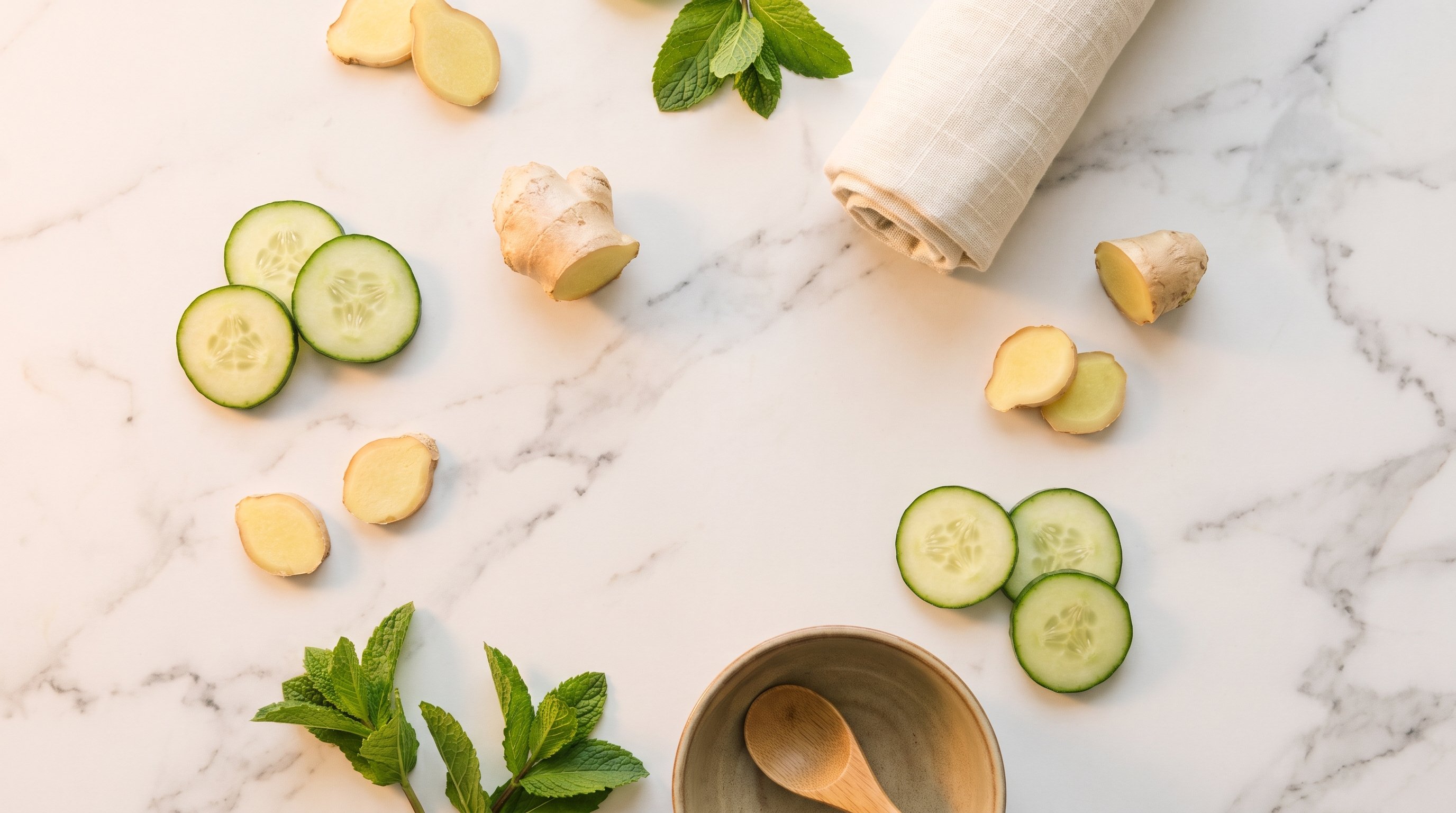
Cucumber and melon are water-rich foods that add volume without giving gut bacteria much fermentable material to work through.
Ginger and peppermint are traditionally used to settle the stomach because they relax gut muscle, which can help trapped gas move rather than sit.
Here's the honest arithmetic: if a meal leaves you bloated for 2 hours normally, and you swap half the plate for something lighter and less fermentable, you're not curing anything - you're just giving the gut less work to do, which tends to shorten that window.
None of this is instant and none of it is guaranteed, because everyone's gut responds a little differently to the same foods.
Why This Beats the Harder Alternative
The harder alternative is cutting out entire food groups or following a rigid elimination plan - it can work, but it's hard to sustain and easy to abandon after a bad week.
Swapping a few high-fermentation foods for gentler ones is a smaller ask, and smaller asks get repeated.
Adherence is the whole game here - a mild change you keep doing beats a strict one you quit after five days.
The same logic applies to movement: a short walk done daily does more over a month than an intense session done once and never repeated.
The Quantity Question: How Much, How Often
There's no single portion size that works for everyone, but a useful starting point is small, frequent swaps rather than one giant overhaul.
Try replacing one bloat-prone food per meal rather than rebuilding your whole plate at once - it's easier to notice what actually helped.
Find Your Own Number
Track how you feel 2 hours after eating for a week, noting which meals left you comfortable and which didn't - that's your own working list, not a generic one.
| Food | Why It Helps | When To Have It |
|---|---|---|
Cucumber | High water content | With any meal |
Ginger | Traditionally settles stomach | Tea or grated fresh |
Oats | Gentle soluble fibre | Breakfast |
Plain yoghurt | Live cultures, easy to digest | Any time |
Peppermint tea | Relaxes gut muscle | After meals |
The Practical Question: Making It Fit Your Day
Knowing which foods help is one thing - remembering to actually eat them on a busy Tuesday is another.
A meal plan built around food you already like removes the guesswork, so you're not standing in the kitchen trying to recall which teas settle the stomach.
A good app includes an easy-to-follow meal plan alongside gentle daily movement, so the food side and the movement side sit in one place instead of two separate habits to remember.
Keeping water intake, steps and weight tracked in one spot also makes it easier to notice patterns - like whether a low-water day lines up with a more bloated one.
Comparison: Food Swaps Versus Other Approaches
Bloating relief comes from a few different directions, and it helps to see them side by side before deciding where to start.
| Approach | Daily Effort | Sustainable |
|---|---|---|
Food swaps | Low | High |
Elimination diet | High | Low |
Daily walking | Low | High |
Skipping meals | Medium | Low |
Tracking water intake | Low | High |
The pattern is clear: the options that ask the least of you day to day are the ones most likely to still be happening in a month.
The Forbidden Promise, Answered Honestly
No food and no walk targets bloating in one specific spot or clears it overnight - the body doesn't work that way.
Bloating comes from gas, water retention and digestive speed, all of which respond to the whole pattern of what you eat and how much you move, not to any single miracle food.
The honest answer is that consistent, gentler eating and regular movement tend to shorten uncomfortable spells over time - there's no set day it disappears, and expecting one just sets you up to quit early.
Levers That Change the Result
A few habits carry more weight than the rest for easing bloating over time.
What Actually Moves the Needle
- Water intake - staying topped up helps digestion keep moving instead of slowing down and trapping gas.
- Meal pace - eating slower means swallowing less air, which is a direct and often overlooked cause of bloat.
- Daily movement - a short walk after eating helps the gut do its job rather than sitting still for hours.
How Long Until You See Results?
Some people notice a difference within a few days of swapping foods and adding short walks, others take longer, and that's normal - guts don't run on a fixed schedule.
The point where most people quit is the first week, when nothing feels dramatically different yet.
Sticking with the small swaps past that point is usually where the pattern starts to show.
Your First Four Weeks
Here's a rough shape for the first month - the order matters more than hitting exact numbers.
| Week | Food Focus | Movement Focus |
|---|---|---|
Week 1 | Swap one food per meal | Short daily walk |
Week 2 | Add water tracking | Walk after largest meal |
Week 3 | Note which foods help most | Build to daily habit |
Week 4 | Repeat what worked | Keep consistent pace |
What Stalls Progress
Eating Too Fast
Swallowing air with rushed meals adds to bloat regardless of what's on the plate - slowing down is free and immediate.
Skipping Water
Low fluid intake makes digestion sluggish, so pair any food swap with steady water intake through the day.
All-Or-Nothing Swaps
Overhauling every meal at once is hard to sustain - change one thing at a time and keep what works.
Sitting Still After Eating
Long stretches without movement slow digestion further, so even a short walk after a meal can help things along.
Expecting a Fixed Timeline
Looking for results by a set date leads to quitting early - focus on the habit, not the calendar.
Why Walking Yoga Works for This
Bloating responds best to small, repeated habits rather than one dramatic change, and that's exactly the shape Walking Yoga is built around.
Walking Yoga pairs gentle daily sessions with a meal plan built around food you already like, plus water and weight trackers that make patterns easy to spot instead of guessed at.
The stress-relief techniques and guided meditations inside the app also help, since a calmer body tends to digest more smoothly than a tense one.
Final Thoughts
Bloating is annoying but rarely mysterious once you look at the pattern - what you ate, how fast, how much water, and how much you moved afterwards.
Start with one small food swap today, add a short walk, and let Walking Yoga help keep the meal plan and movement side by side instead of scattered across different apps.
FAQ
Water-rich, low-fermentation foods like cucumber, melon and plain yoghurt tend to sit lightest on the gut. Ginger and peppermint tea are also commonly used to settle things after a heavier meal.
No - small swaps within meals tend to be easier to sustain than cutting entire food groups. A gentler, repeatable change usually beats a strict one that gets abandoned after a rough week.
Start with one swap per meal rather than restructuring your whole day. Walking Yoga includes a built-in meal plan around food you already like, which removes most of the planning effort.
It usually means old habits crept back in, like rushed meals or low water intake. Trackers make it easier to spot which habit slipped before it turns into a pattern.
Share this post