Easy High-Protein Meal Plan: How to Make It Fit a Normal Busy Week
By:Author:Walking Yoga Editorial
Updated on:September 30, 2026

- Does an Easy High-Protein Meal Plan Work?
- Why This Beats the Harder Alternative
- The Quantity Question: How Much Protein, How Often
- The Practical Question: Making It Fit a Real Week
- Comparison: Easy Plan vs Strict Plan
- The Forbidden Promise, Answered Honestly
- How Long Until You See Results?
- Your First Four Weeks
- What Stalls Progress
- Why Walking Yoga Works for This
- Final Thoughts
- Frequently Asked Questions
An easy high-protein meal plan usually means three main meals built around a protein source you already like, plus one or two snacks - nothing more complicated than that.
The mechanism is simple: protein takes more effort for the body to break down than carbohydrate or fat, and it keeps you fuller for longer, so you eat with more intention instead of grazing.
This guide covers whether the approach holds up, how much protein actually makes sense, a four-week starting structure, and where most people quietly fall off.
Does an Easy High-Protein Meal Plan Work?
The mechanism behind a high-protein plan is straightforward: protein blunts hunger better than the same number of calories from carbs or fat, so portions tend to shrink on their own.
Do the arithmetic on a normal day. Swap a pastry breakfast for eggs and a side of fruit, and you have added protein without adding much volume to the plate.
That is the whole trick - not a miracle, just a swap that changes how full you feel three hours later.
It only works if you actually eat the plan, which is why simplicity matters more than perfection.
Why This Beats the Harder Alternative
A meal plan that demands weighing every gram or cooking three separate meals a day rarely survives a busy Tuesday.
An easy version - repeat a handful of meals, keep a short shopping list, batch-cook where you can - gets followed more often, and following it more often is what actually moves the needle.

Adherence beats intensity here the same way it does with exercise: a plan you complete four times a week for a month always outperforms a strict plan you abandon after four days.
Nobody sticks with something that feels like a punishment, so the easy version is not a compromise - it is the point.
The Quantity Question: How Much Protein, How Often
Most easy high-protein meal plans aim to put a protein source on the plate at every meal, roughly three times a day, rather than chasing an exact gram target.
Spreading it across the day - breakfast, lunch, dinner, maybe a snack - tends to be easier to sustain than trying to hit a big number in one sitting.
Find Your Own Number
There is no single correct amount that suits everyone, so start with what fits your usual meals and adjust from there.
The table below is a starting point, not a rule - use it to see where your current meals already land and where a small swap helps.
| Meal | Simple Example | Easy Swap |
|---|---|---|
Breakfast | Eggs or Greek yoghurt | Add nuts or seeds |
Lunch | Chicken, beans or tofu | Add a boiled egg |
Dinner | Fish, lean meat or lentils | Add extra beans |
Snack | Cottage cheese or edamame | Swap crisps for jerky |
The Practical Question: Making It Fit a Real Week
The honest barrier to any meal plan is not knowledge, it is time - deciding what to cook, buying the right things, and doing it again tomorrow.
A shorter list of repeatable meals solves most of that, especially if the same few proteins show up across the week in different forms.
This is where a meal plan built around food you already like earns its place, and it is exactly the kind of plan Walking Yoga includes alongside its movement sessions - so eating and moving get tracked in one place instead of two.
Pairing food choices with a daily habit you are already building makes both easier to keep, rather than treating nutrition as a separate project.
Comparison: Easy Plan vs Strict Plan
Most people weighing this up are really choosing between something rigid that promises fast results and something flexible that promises consistency.
| Factor | Easy Plan | Strict Plan |
|---|---|---|
Meal variety | Repeats a few favourites | Different meal daily |
Prep time | Batch cook once | Cook fresh each meal |
Flexibility | Swaps allowed anytime | Fixed ingredients only |
Tracking effort | Rough portions | Precise weighing |
Likely to stick | Higher | Lower |
The Forbidden Promise, Answered Honestly
No meal plan, high-protein or otherwise, targets fat in one area of the body - not the stomach, not anywhere else.
The body decides where it draws energy from, and no food choice or exercise overrides that.
There is also no overnight version of this - a plate of chicken and vegetables does not undo months of habits by breakfast.
The real answer is unglamorous: consistent meals, most days, over time, alongside regular movement.
How Long Until You See Results?
This is where most people quit - the first stretch where the plan feels routine but nothing visible seems different yet.
Rather than watching for a specific number, watch for smaller signals: fewer energy dips, less snacking between meals, easier consistency week to week.
Timing varies from person to person, so treat the early weeks as habit-building rather than a countdown.
Your First Four Weeks
The order below matters more than any exact number - get the habit steady before adjusting portions or variety.
| Week | Focus |
|---|---|
Week 1 | Add protein to breakfast only |
Week 2 | Add protein to lunch too |
Week 3 | Batch cook two dinners |
Week 4 | Add one planned snack |
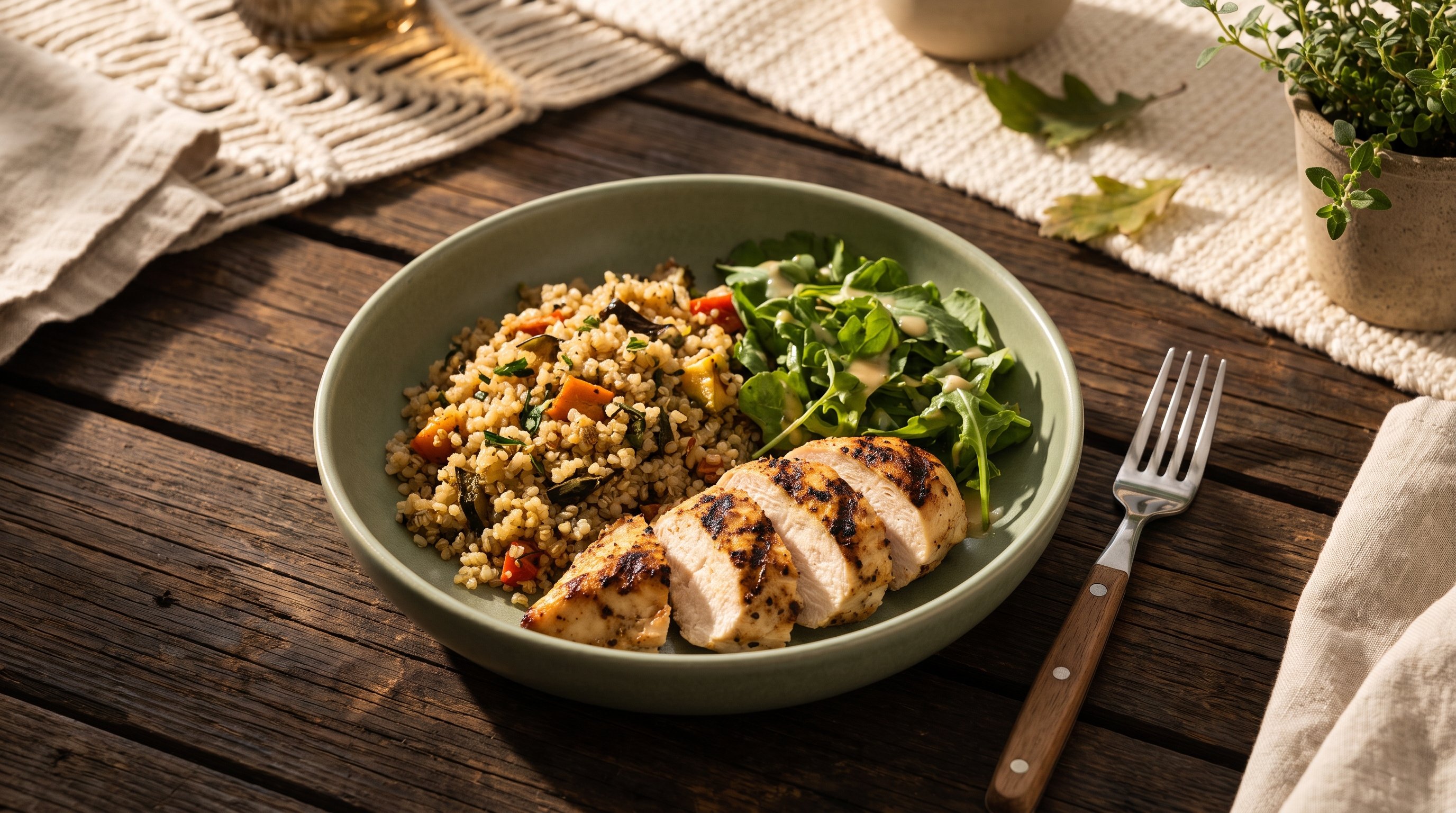
By the end of week four, most of these swaps have become the default rather than something you have to remember.
What Stalls Progress
Skipping Breakfast Entirely
This usually leads to a bigger, less controlled lunch, so a quick protein option at breakfast is worth the two minutes it takes.
Treating Snacks As an Afterthought
Unplanned snacking is where most extra calories sneak in - keep one or two protein-based snacks ready instead of deciding in the moment.
Copying Someone Else's Exact Plan
A plan built for another person's tastes rarely survives contact with your actual week - adjust the meals to food you genuinely enjoy.
Ignoring the Movement Side
Meals and daily movement work together, not separately - a short daily session alongside meals keeps the whole routine visible.
All-Or-Nothing Thinking
Missing one meal does not undo the week - the plan only fails if you stop returning to it.
Why Walking Yoga Works for This
Walking Yoga pairs an easy-to-follow personal meal plan with daily movement sessions, so food and activity get tracked in the same place instead of two separate habits competing for attention.
Its trackers cover step counts, water intake and weight, which makes it easier to notice the small signals mentioned earlier - steady energy, fewer snack decisions - rather than waiting on a single number.
The challenges built into the app also give the habit some structure without turning it into another strict rulebook to follow.
Final Thoughts
An easy high-protein meal plan does not need to be complicated to work - it needs to be repeatable, built around food you already enjoy, and paired with some daily movement.
Pick one meal to adjust this week, keep it simple, and let Walking Yoga help keep the meals and the movement in the same place.
Frequently Asked Questions
Will a High-Protein Meal Plan Actually Help With Weight Loss?
It can support it by keeping you fuller on fewer calories, but the plan works alongside movement and consistency, not on its own. There is no fixed figure to expect, since results depend on the whole routine, not one meal choice.
Isn't This Just Another Restrictive Diet?
No - the point of an easy plan is that nothing is off-limits, you are just adding protein where it is missing. Repeating a handful of meals is meant to reduce effort, not add rules.
What If There's No Time to Cook Every Day?
Batch-cooking two or three meals at once covers most of the week without daily prep. A shorter list of repeated meals means fewer decisions and less time in the kitchen overall.
Why Do Most People Give up on Meal Plans After a Few Weeks?
Usually because the plan was too strict to fit a real week, or progress felt invisible early on. Walking Yoga's tracking features help by keeping meals, water and steps visible day to day, so the routine stays noticeable even before bigger changes show up.
Share this post