Clean Eating Meal Plan: A Practical Guide That Sticks
By:Author:Walking Yoga Editorial
Updated on:October 28, 2026
- Setting Up Your Clean Eating Meal Plan
- How Much Clean Eating Actually Needs to Change
- Making a Clean Eating Meal Plan Work Around Your Week
- A Four-Week Starter Plan for Clean Eating
- When a Clean Eating Habit Starts to Feel Normal
- Mistakes That Quietly Undercut a Clean Eating Plan
- Pairing a Clean Eating Meal Plan With Walking Yoga
- Keeping Your Clean Eating Choices Going
A clean eating meal plan just means building meals around food in a form close to how it grows - vegetables, fruit, whole grains, lean proteins - and keeping heavily processed options to the edges of your plate rather than the centre.
It works because whole foods tend to carry more fibre and water for the same number of calories, which fills you up without you having to count or restrict anything.
This guide covers the steps to start, how much to actually change, a four-week starter plan, where people usually get stuck, and how to fit it into a week that is already full.
Setting Up Your Clean Eating Meal Plan
You don't need to overhaul your kitchen overnight. A handful of deliberate steps gets the plan moving without the overwhelm.
Steps to Build the Plan
- Audit your current week - write down what you actually eat for three days, no judgement, just facts.
- Pick three meals to rebuild first - usually breakfast and the two meals you eat most often away from home.
- Stock whole-food staples - oats, rice, beans, frozen vegetables, eggs, tinned fish, so a clean option is always the easy one.
- Batch one component at a time - a cooked grain, a roasted vegetable tray, a protein - rather than full dishes.
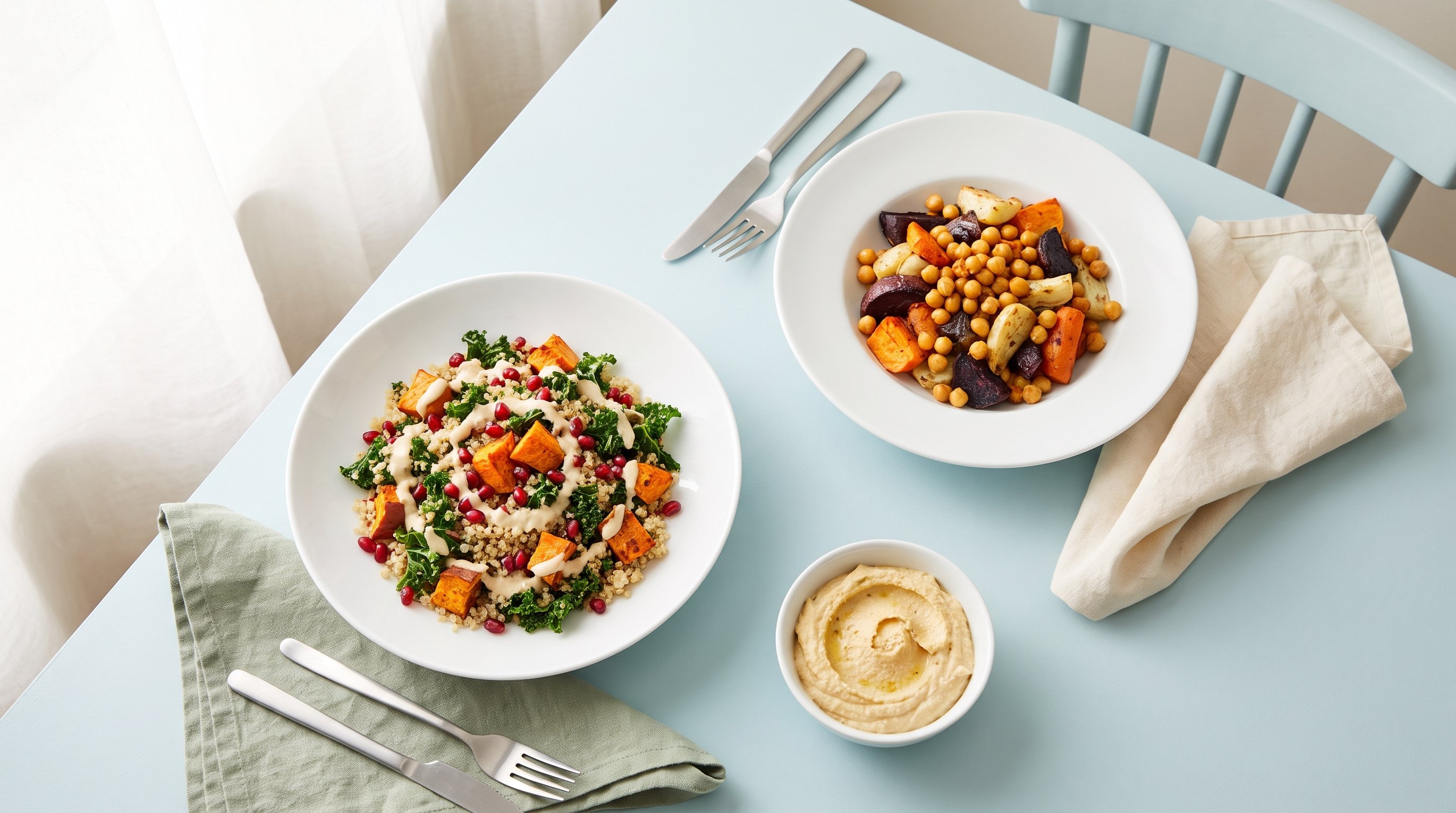
- Build meals from the plate, not the recipe - half vegetables or fruit, a quarter protein, a quarter whole grain or starch.
- Keep one or two favourite foods in rotation - a plan that bans everything you enjoy rarely survives a second week.
- Review and adjust weekly - swap what didn't get eaten for something that will.
How Much Clean Eating Actually Needs to Change
There's no single number that defines clean eating, but a rough split helps you see where your plate currently sits and where to nudge it.
A Simple Plate Guide
Use this as a starting point rather than a rule, and adjust the portions to your own appetite and activity.
| Plate Component | Rough Portion | Example |
|---|---|---|
| Vegetables and fruit | Half the plate | Mixed salad, roasted greens |
| Lean protein | Quarter of the plate | Chicken, beans, tofu, fish |
| Whole grains or starch | Quarter of the plate | Brown rice, oats, potatoes |
| Added fats | One to two tablespoons | Olive oil, nuts, seeds |
| Processed extras | Occasional, not daily | Crisps, sweets, fast food |
Making a Clean Eating Meal Plan Work Around Your Week
The plate guide only matters if it survives a Tuesday night when you're tired and the fridge is half empty.
Pick one meal a day that's non-negotiable to keep clean - breakfast works for most people - and let the rest flex around whatever the day throws at you.

Movement and food changes tend to reinforce each other, and this is where a meal plan built around food you already like can take the guesswork out of the eating side while you focus on moving more.
Walking Yoga pairs that kind of meal plan with step tracking and water tracking in one place, so the food side and the movement side aren't two separate projects.
A Four-Week Starter Plan for Clean Eating
The order below matters more than hitting every target perfectly - each week builds on the habit before it.
| Stage | Focus | Action |
|---|---|---|
| Week 1 | Fix breakfast | Swap one processed breakfast for whole foods |
| Week 2 | Add vegetables | Add a vegetable or fruit to lunch and dinner |
| Week 3 | Batch one staple | Cook a grain and a protein in bulk once |
| Week 4 | Review and repeat | Keep what worked, swap what didn't |
When a Clean Eating Habit Starts to Feel Normal
The first week or two usually feels like extra effort, because you're thinking about every meal instead of running on autopilot.
That's normal and it eases once shopping, cooking and plating settle into a rhythm rather than a decision each time.
Be vague about exactly when it clicks - it depends on how often you cook, how busy your weeks are, and how much you're changing at once - but the effort does get smaller the longer you keep going.
Mistakes That Quietly Undercut a Clean Eating Plan
Cutting Out Entire Food Groups at Once
Dropping carbs, fats, or dairy all in one go usually backfires because the plan feels restrictive and hard to sustain. Change one category at a time instead.
Treating 'clean' As a Reason to Skip Meals
Skipping meals to compensate for an earlier choice just sets up stronger hunger later. Eat regularly and let the next meal be the whole-food one.

Buying Based on Packaging Claims
Labels like 'natural' or 'light' don't automatically mean whole food. Check the ingredient list instead and favour short, recognisable ones.
No Room for the Foods You Actually Enjoy
A plan with zero flexibility tends to end in an all-or-nothing week. Keep a favourite treat in rotation so the plan feels livable.
Expecting the Scale to Move on a Schedule
Clean eating changes what's on your plate, not a timeline for results. Focus on the meals you're building, not a date on the calendar.
Pairing a Clean Eating Meal Plan With Walking Yoga
Food choices are only half the picture, because movement alone is slow without a change to what's on your plate, and the reverse is true too.
Walking Yoga brings an easy-to-follow personal meal plan built by nutritionists together with step counters, water intake and weight trackers, so you're not juggling separate apps for food and movement.
It also includes stress-relief techniques and guided meditations, which matter because decision fatigue around food often creeps in when stress is already high.
Walk Your Way Calm
Move Mindfully Daily
Keeping Your Clean Eating Choices Going
Start with one meal and one week, not a full kitchen overhaul, and let the plan grow from there.
Walking Yoga can sit alongside that first step, keeping your meals, water and movement in view so the whole thing feels like one routine instead of several.
FAQ
Eating more whole foods and fewer processed ones often means more fibre and fullness for the same calories, which can support weight management over time. There's no fixed figure or timeframe to promise, since it depends on your overall diet and activity.
It doesn't have to be, since the focus is on the form of the food rather than banning entire groups. Keeping favourite foods in rotation is part of making it sustainable, not a failure of the plan.
Batch cooking one component at a time, like a grain or a protein, cuts the daily effort down to assembly rather than full cooking. A meal plan built around food you already like, such as the one inside Walking Yoga, can also take the planning step off your hands.
It usually fades when the plan changes too much too fast or leaves no room for foods you enjoy. Scaling back to one or two changes at a time, and reviewing weekly rather than daily, tends to hold up longer.
Share this post