Walking Workout At Home: A Practical Beginner's Guide
By:Author:Walking Yoga Editorial
Updated on:October 28, 2026
- What a Week of Home Walking Actually Looks Like
- How Much Home Walking Actually Counts
- Why Home Walking Beats a Punishing Home Circuit
- Making Home Walking Fit Around Your Day
- Adjusting Home Walking for Different Situations
- When a Home Walking Habit Starts to Settle In
- Building a Home Walking Routine With Walking Yoga
- Starting Your First Home Walking Session Today
A walking workout at home just means moving with purpose indoors - laps of a room, stairs, marching on the spot, or pacing while you're on a call. No treadmill required, no equipment, no special clothes.
It works because your body does not care where the steps happen. Moving muscles use energy and challenge your heart and lungs whether you are on a trail or circling the kitchen table.
This guide covers what a realistic week looks like, how much walking actually counts, why it beats harder plans people quit, and how to adapt it to your own situation.
What a Week of Home Walking Actually Looks Like
You don't need a complicated schedule. A simple pattern that mixes short and slightly longer sessions is easier to stick with than one long walk you have to psych yourself up for.
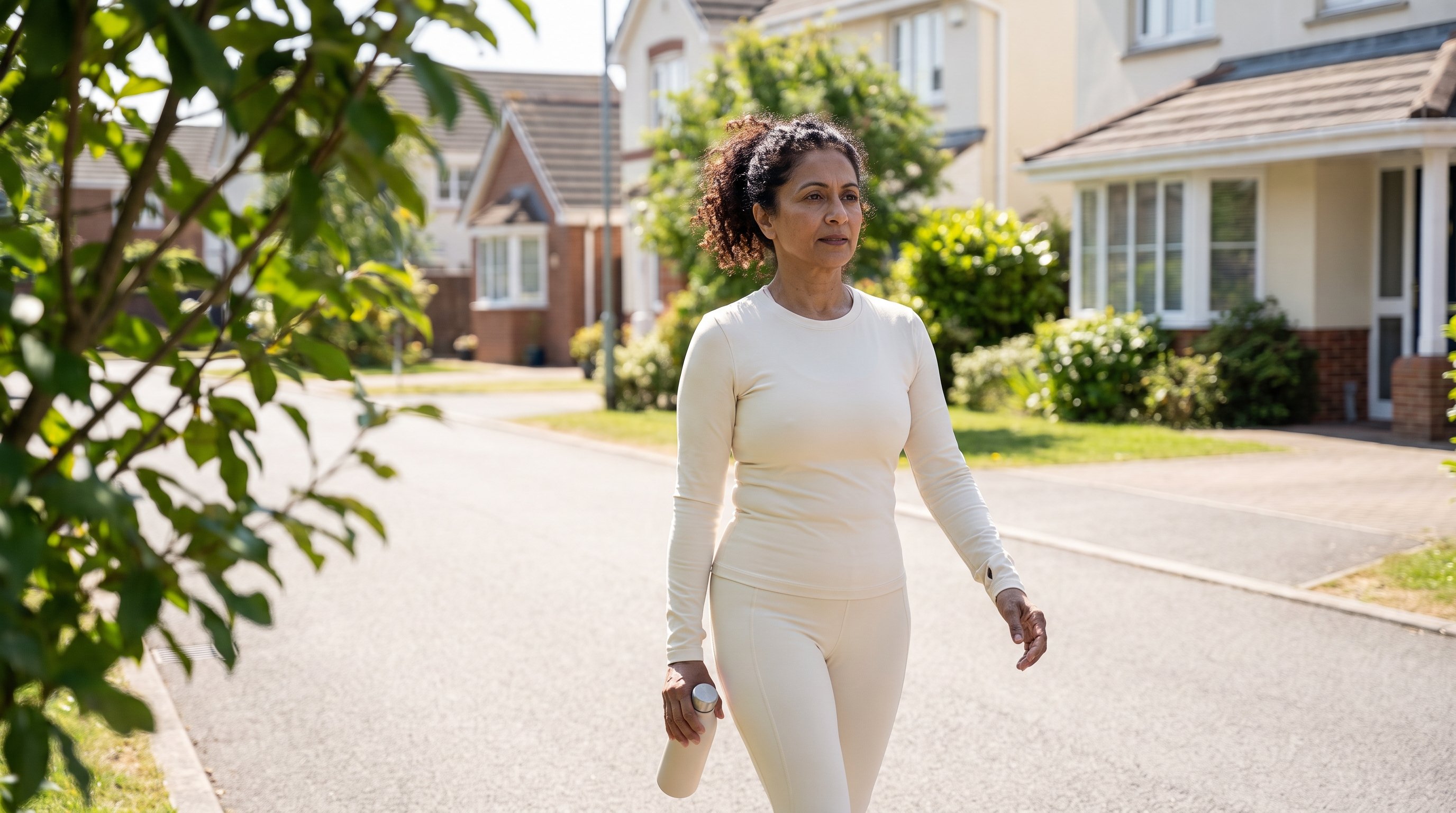
A Sample Home Walking Week
- Monday - 10 minutes of laps around the house before breakfast
- Tuesday - 15 minutes marching on the spot during a video or podcast
- Wednesday - two 5-minute walking breaks instead of sitting through a long call
- Thursday - 10 minutes of stair laps if you have them, or hallway laps if not
- Friday - 20 minutes split into two sessions around work
- Saturday - a longer 20 to 30 minute session when you have more time
- Sunday - rest, or a gentle 10-minute walk if you feel like moving
Swap any day around to fit your week. The point is repetition, not a perfect pattern.
How Much Home Walking Actually Counts
Finding a Number You Can Actually Hit
There's no single magic amount, but a session you can repeat most days beats one you can only manage occasionally. Start with a duration that feels almost too easy, then build from there.
| Stage | Session Length | Frequency |
|---|---|---|
| Just starting out | 5 to 10 minutes | Most days |
| Building consistency | 10 to 15 minutes | 5 to 6 days |
| Comfortable habit | 15 to 20 minutes | Daily |
| Adding more | 20 to 30 minutes | Most days |
If 10 minutes daily feels manageable for a few weeks, that's a win worth keeping before you add more time.
Why Home Walking Beats a Punishing Home Circuit
Compare a 15-minute home walk with a 45-minute high-intensity circuit of burpees, jump squats and sprints. The circuit burns more energy in that single session, no argument there.
But the circuit is hard to face on a tired evening, hard on unconditioned joints, and easy to skip entirely when motivation dips. A walk around the living room is not.
Four 15-minute walking sessions a week add up to an hour of movement. One skipped circuit session adds up to nothing.
Sessions completed over weeks and months is what shapes results, not how brutal any single session felt.
Making Home Walking Fit Around Your Day
The easiest home walking habit attaches itself to something already happening. Walk while the kettle boils, while a video call is audio-only, while dinner is in the oven.
Stacking movement onto an existing routine means you don't need a separate decision each time, which is often the actual barrier.
Walking Yoga can help here by combining the walking itself with guided sessions and simple trackers for steps, so the habit has a home rather than living only in your head.
Keeping steps, water and weight in one place makes it easier to notice a pattern building, rather than guessing whether this week went better than last.
Adjusting Home Walking for Different Situations
If You're Starting From Scratch
Keep the first week deliberately short - five minutes, once or twice a day. The goal is proving to yourself the habit fits, not testing your limits.
If Your Week Is Already Full
Break walking into two or three short bursts rather than hunting for one free block. Three 5-minute walks add up to the same total time as one 15-minute walk.
If You're Returning After a Break
Go back to shorter sessions than you remember managing before, even if it feels unnecessary. Rebuilding the habit matters more than matching an old pace straight away.
If Space at Home Is Limited
A short hallway, a landing, or even pacing one room is enough. Laps count the same as a straight path - it's the minutes moving that matter, not the shape of the route.
When a Home Walking Habit Starts to Settle In
There's no fixed point where a walking habit suddenly feels easy. For some people the routine stops feeling like an effort after a few weeks of showing up.
For others it takes longer, and that's fine too - the pace this settles at isn't a sign of whether it's working.
Most drop-off happens in the first couple of weeks, usually because the sessions started too long or too ambitious. Keeping them short at the start is what gets you past that point.
Building a Home Walking Routine With Walking Yoga
A home walking workout is simple on its own, but movement alone tends to be slow going without a nutrition side to match it. That's the honest limitation worth naming upfront.
Walking Yoga pairs guided walking and yoga sessions with a meal plan built around food you already like, plus trackers for steps, water, weight and fasting so progress is visible rather than guessed at.
There are also stress-relief techniques and guided meditations for days when the walk itself isn't enough, and challenges designed to help the habit stick past the first few weeks rather than fade out.
Walk Your Way Calm
Move Mindfully Daily
Starting Your First Home Walking Session Today
Pick one five to ten minute slot today and walk it, anywhere indoors works. That single session is more useful than a perfect plan you haven't started yet.
Walking Yoga can sit alongside that first session as a way to track it and build on it, but the walk itself is what matters first.
FAQ
Walking at home adds to your overall movement for the day, which plays a part alongside what you eat. It is not a targeted fix for any one area of the body, but consistent movement over time is a genuine factor.
The movement itself is the same whether you're circling a room or walking down a street. Outdoor walking adds scenery and fresh air, but indoor laps use the same muscles for the same amount of time.
A hallway, landing or even one room is enough for laps, and stairs work well if you have them. The route doesn't need to be long, it just needs to keep you moving for the session length.
This is the most common point people stop, usually in the first couple of weeks. Keeping sessions short and attaching them to something you already do each day, or using an app like Walking Yoga to track short daily sessions, tends to carry people past that dip.
Share this post