Walking For Beginners: A Practical Guide To Starting Well
By:Author:Walking Yoga Editorial
Updated on:October 28, 2026
- Can a Simple Walk Really Make a Difference?
- Walking for Beginners Versus Starting With a Gym Plan
- Why Walking Beginners Stick With It Longer
- Adjusting Walking for Beginners in Different Situations
- Making Walking for Beginners Fit a Normal Week
- The Myth That Walking Targets Belly Fat
- Letting Walking Yoga Guide Your First Steps
- Turning Your First Walk Into a Lasting Routine
The most useful thing to know about walking for beginners is that you do not need gear, a gym or a training plan to start - you just need shoes and a direction.
Walking works because it is movement you can repeat often without wrecking your legs or your motivation. Unlike harder workouts that need recovery days, a daily walk mostly just needs a bit of time and a decent pair of shoes.
This guide covers what walking actually does for your body, how it compares to harder workouts, who it suits, and how to build it into a week that is already full.
Can a Simple Walk Really Make a Difference?
Walking moves your body, raises your heart rate above resting, and burns energy for as long as you keep going - that is the whole mechanism.
There is no special trick to it. A 30-minute walk at a steady pace is 30 minutes of your body working harder than it does sitting still, repeated as often as you choose to show up.
The Arithmetic Nobody Dresses Up
If you walk for 30 minutes most days of the week, that is around 3.5 hours of movement a week - more than many people manage with any other form of exercise, simply because walking is easier to repeat.
Add that up over a month and you get roughly 14 hours of walking, done in small chunks instead of one big push.
None of this guarantees a specific outcome, because bodies and routines differ. What it does show is that consistency, not intensity, is doing most of the work.
Walking for Beginners Versus Starting With a Gym Plan
Most beginners weigh up two starting points: lace up and walk out the door, or sign up for a structured gym plan first.
Both can work. The difference is in what it takes to actually begin and keep going.
| Factor | Walking | Gym Plan |
|---|---|---|
| Getting started | Walk out the door today | Sign up, learn equipment first |
| Equipment needed | Comfortable shoes | Membership, machines, weights |
| Recovery time | Minimal between sessions | Often a rest day needed |
| Learning curve | Walk the way you already walk | Form and technique to learn |
| Cost to begin | Free or near-free | Membership fees apply |
Neither option is wrong. The point is that walking removes most of the friction that stops people from starting at all.
Why Walking Beginners Stick With It Longer
The honest adherence argument is simple: a workout you can do tired, in normal clothes, without planning ahead gets done far more often than one that needs a bag packed and a changing room.
A punishing new gym routine often burns people out within a few weeks, not because the plan is wrong but because it asks too much of a brand-new habit.
Walking asks very little at the start. That low barrier is exactly why it tends to survive the first month, when most new routines quietly fall away.
Sessions completed over a month matter more than how hard any single session felt - a moderate walk done twenty times beats an intense workout done twice.
Adjusting Walking for Beginners in Different Situations
The Complete Beginner
Start with short walks of 10-15 minutes and let the time grow naturally as it starts to feel normal. There is no rush to hit a big number in week one.
The Busy Person
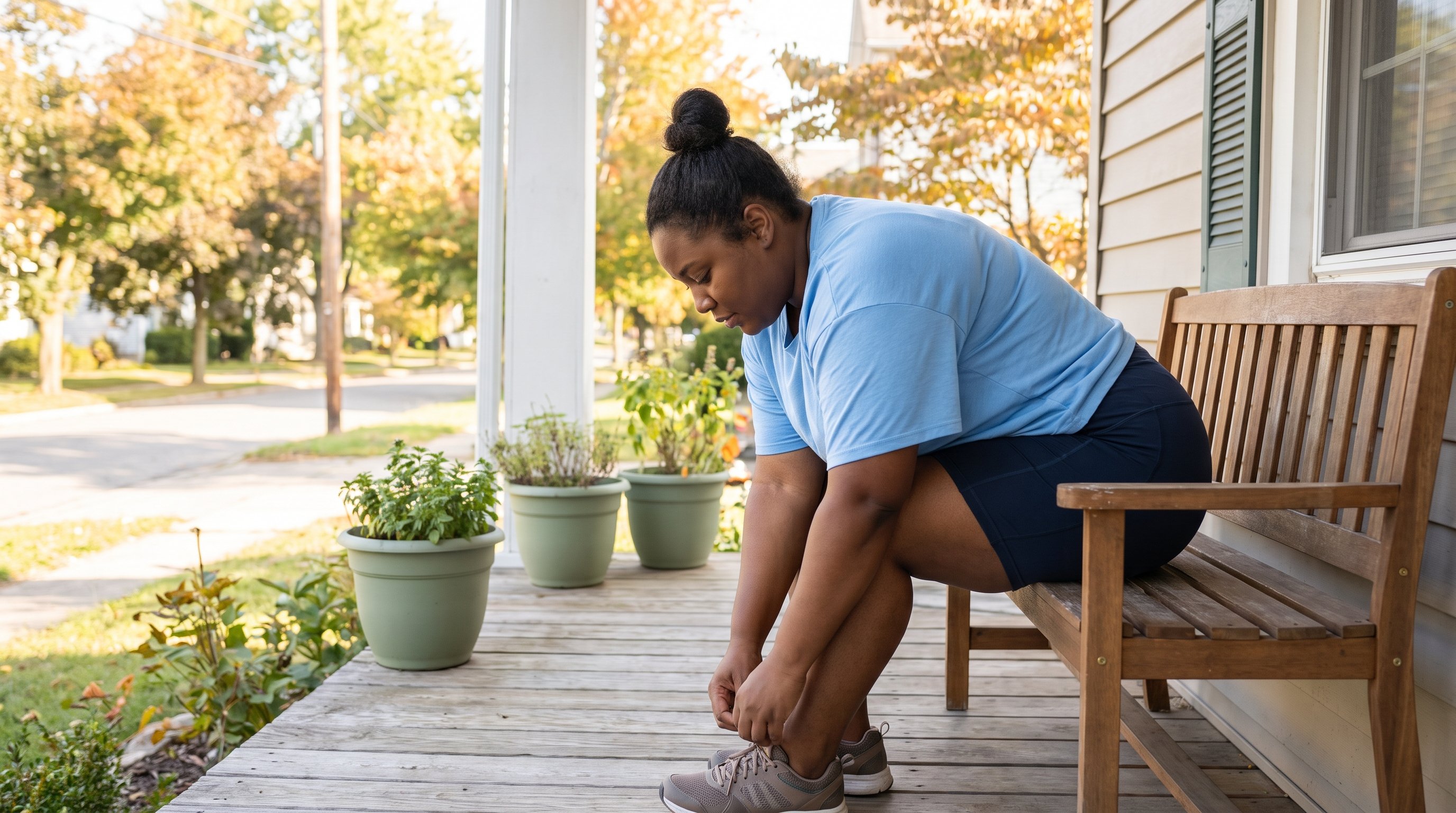
Break walking into pieces around the day - a walk to the shop, a lap of the block on a call, a walk after dinner. Three short walks add up the same as one long one.
The Older Walker
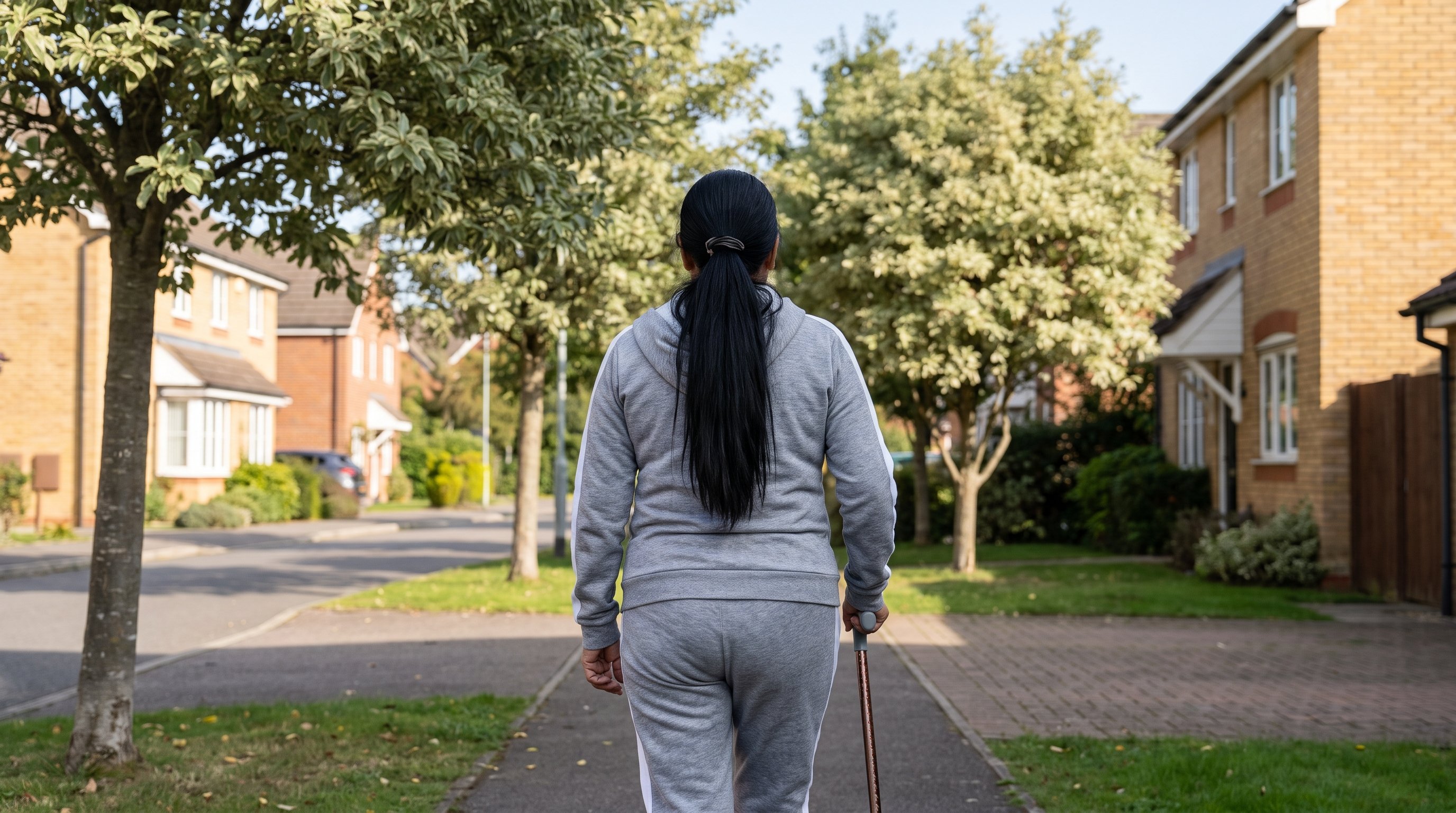
A steady, flat route with good footing matters more than pace. Walking at a comfortable speed still counts, and building up gradually protects joints that are less used to movement.
The Returning Exerciser
If you used to run or train and stopped, walking is a sensible way back in. It rebuilds the habit of daily movement without the soreness that comes from jumping straight back into harder training.
Making Walking for Beginners Fit a Normal Week
A normal week has school runs, work, chores and not much spare time - so walking has to fit around life, not the other way round.
The easiest approach is attaching a walk to something that already happens daily: after breakfast, during a lunch break, or right before bed.
This is where keeping steps, water and weight in one place helps, because it turns a vague intention into something you can actually see add up day to day. Walking Yoga's trackers do exactly that, so a short morning walk and an evening stroll both count toward the same visible total.
Seeing the number move is often what keeps a new walker going past the first week, long after the novelty wears off.
The Myth That Walking Targets Belly Fat
A common hope among new walkers is that enough walking will melt fat from one specific area - the stomach, the thighs, the arms.
That is not how bodies work. You cannot choose where weight comes off by choosing which body part you move, because the body draws on energy stores across the whole system, not from the muscle doing the work.
The honest answer is that walking contributes to overall energy balance, and what happens to your shape over time depends on genetics, overall habits and nutrition together, not on which route you walked.
That is not a disappointing answer. It just means the goal is consistent movement over time, not a shortcut to one area.
Letting Walking Yoga Guide Your First Steps
Walking on its own is a solid start, but pairing it with some structure tends to make the habit last longer, especially once the new-routine excitement fades.
Walking Yoga builds a tailored-for-you plan around gentle yoga and walking together, so beginners get guided sessions instead of guessing how far or how often to go.
It also pairs movement with a meal plan built around food you already like, stress-relief techniques, and over 100 guided meditations, so the habit covers more than just steps.
Challenges inside the app are built to help you form good habits gradually, which matters more for beginners than hitting a big number on day one.
Walk Your Way Calm
Move Mindfully Daily
Turning Your First Walk Into a Lasting Routine
The simplest next step is picking one walk you can do today, even if it is short, and doing it without overthinking the distance or the pace.
Walking Yoga can take it from there, turning that first walk into a routine with guided sessions and trackers that show the pattern building week by week.
FAQ
There is no single required number, but building up toward 30 minutes most days is a reasonable, repeatable target. Shorter walks spread across the day count just as much as one long session.
Walking alone is a solid starting point, but movement without any change to eating habits tends to work slowly on its own. Pairing walking with sensible food choices tends to move things along faster than walking alone.
Breaking walking into two or three short bursts across the day works just as well as one continuous block. A walk to the bus stop and a lap after dinner both count toward the same daily total.
Starting too fast, too far or too often is the most common reason walking routines fall away early. Walking Yoga's gradual challenges and tracking are built to keep the early weeks manageable instead of overwhelming.
Share this post